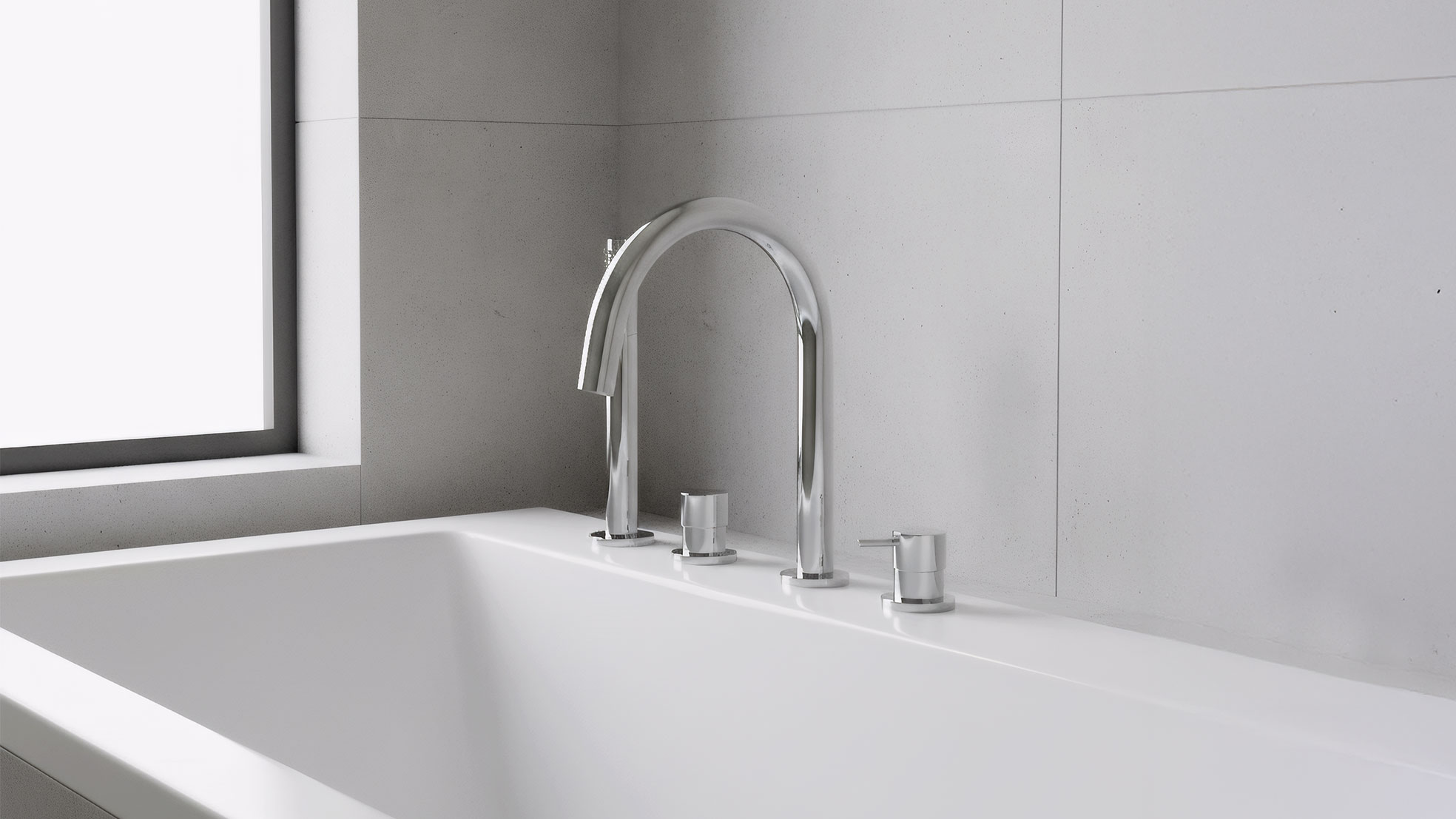
This guide explores how to position bath rim taps to strike the perfect balance between aesthetics and usability.
Why Positioning Matters
Tap placement is a design decision, not just a plumbing consideration. Where you mount your taps establishes the bath's focal points and influences the visual balance of the entire room. Poorly placed taps can make bathing uncomfortable, disturb visual harmony, and even create long-term maintenance headaches. Proper placement, on the other hand, improves the flow of water and the flow of the space itself.
The good news is that once you understand the principles, choosing the right position becomes intuitive.
Classic Placement Options
There are three tried-and-true positions for bath rim taps, each offering a different style statement and practical experience.
Centre Placement (Long Side)
Mounting taps at the centre of the long side creates a balanced, symmetrical look that works particularly well for baths used by more than one person. This position allows both bathers to recline comfortably at either end without taps digging into their back or shoulders. It's a popular choice for freestanding tubs and delivers that polished, hotel-like aesthetic.
The trade-off is slightly more complex plumbing, since pipes need to reach the middle of the bath rather than connecting at one end. But for shared bathing or design-conscious spaces, the result is worth the extra planning.
End Placement (Short Side)
The most common position, and for good reason. Mounting taps at one end is practical for single-person use, simpler to install, and ideal for built-in baths placed against a wall. The taps stay out of the way while you recline at the opposite end, and plumbing runs are typically shorter and more straightforward.
This placement suits traditional bathroom layouts and remains the default choice for most renovations. It's reliable, functional, and works with almost any bath shape.
Diagonal or Off-Centre Placement
For those willing to break from convention, diagonal or off-centre positioning adds visual interest and allows creative use of space. This approach works particularly well with asymmetric tubs, corner baths, or rooms where standard placement would conflict with other fixtures.
Off-centre taps can also solve practical problems. If a window, shelf, or architectural feature occupies the obvious tap location, shifting the position slightly creates a solution that feels intentional rather than compromised.
Comfort and Ergonomics
Beyond style, taps should always be placed with the user's body in mind. A beautiful tap in an awkward position is a daily frustration.
Reach is the first consideration. Can you turn the handles or operate the mixer without leaning awkwardly or straining? The controls should fall naturally to hand, whether you're sitting upright or reclining in the water.
Flow direction matters more than people realise. The water stream should land naturally in the tub, filling it efficiently without splashing onto the rim, the floor, or you. Test the angle before finalising installation. A spout that looks perfect might direct water straight onto the bath edge.
Bathing position is perhaps most important. Taps should always be placed away from the reclining end. Nobody wants to rest their head or shoulders against cold metal fixtures. This seems obvious, but it's a mistake that happens surprisingly often, especially when tap placement is decided based on aesthetics alone.
A well-positioned tap feels natural to use. Unobtrusive when you're relaxing, convenient when you're filling or adjusting the water.
Design Harmony
Rim-mounted taps should complement the bath's shape, not compete with it.
A long rectangular tub often calls for centred taps along the side, emphasising the symmetry and clean lines. A traditional clawfoot bath typically looks best with taps mounted at one end, preserving its classic silhouette and period character. Modern asymmetric designs might benefit from off-centre placement that echoes the tub's unconventional form.
Finish and proportion also play a role. A tall, sculptural mixer might overwhelm a compact tub, while a slim, minimalist spout enhances sleek contemporary designs. Consider how the tap's visual weight relates to the bath's dimensions. The goal is balance: fixtures that feel like they belong, neither dominating the space nor disappearing into it.
The best tap position is the one that feels invisible. Present when needed, but never intrusive.
Practical Considerations
Several practical factors should inform your final decision.
Plumbing access deserves early attention. Ensure your chosen spot allows for straightforward pipework and, crucially, future maintenance access. A beautiful installation that can't be serviced without demolishing tiles is a problem waiting to happen.
Splash zones need realistic assessment. Avoid placing taps where water is likely to spill outside the tub during filling or use. Consider how the spout angle interacts with the bath's shape and depth. Some positions that look logical on paper create splash problems in practice.
Accessories and attachments should factor into planning. Think about how tap placement interacts with shower attachments, hand showers, bath caddies, or any other elements you'll use regularly. A tap position that blocks a convenient caddy spot or tangles with a shower hose creates ongoing annoyance.
Common Mistakes to Avoid
Placing taps at the reclining end is the most frequent error. It seems like a minor issue until you're trying to relax with metal fixtures pressing into your shoulders.
Ignoring splash dynamics leads to wet floors and frustration. Always test spout angle and water flow before finalising the installation.
Choosing style over function creates beautiful bathrooms that are unpleasant to use. The best designs achieve both.
Forgetting maintenance access turns minor repairs into major renovation projects. Plan for the future, not just the installation day.
Mismatching proportions undermines visual harmony. Oversized taps on a small bath, or delicate fixtures on a grand tub, create an imbalance that's hard to ignore once you notice it.